Why Organic Content Makes Your Paid Ads Cheaper: The Case for Backing Every Campaign With Real Content
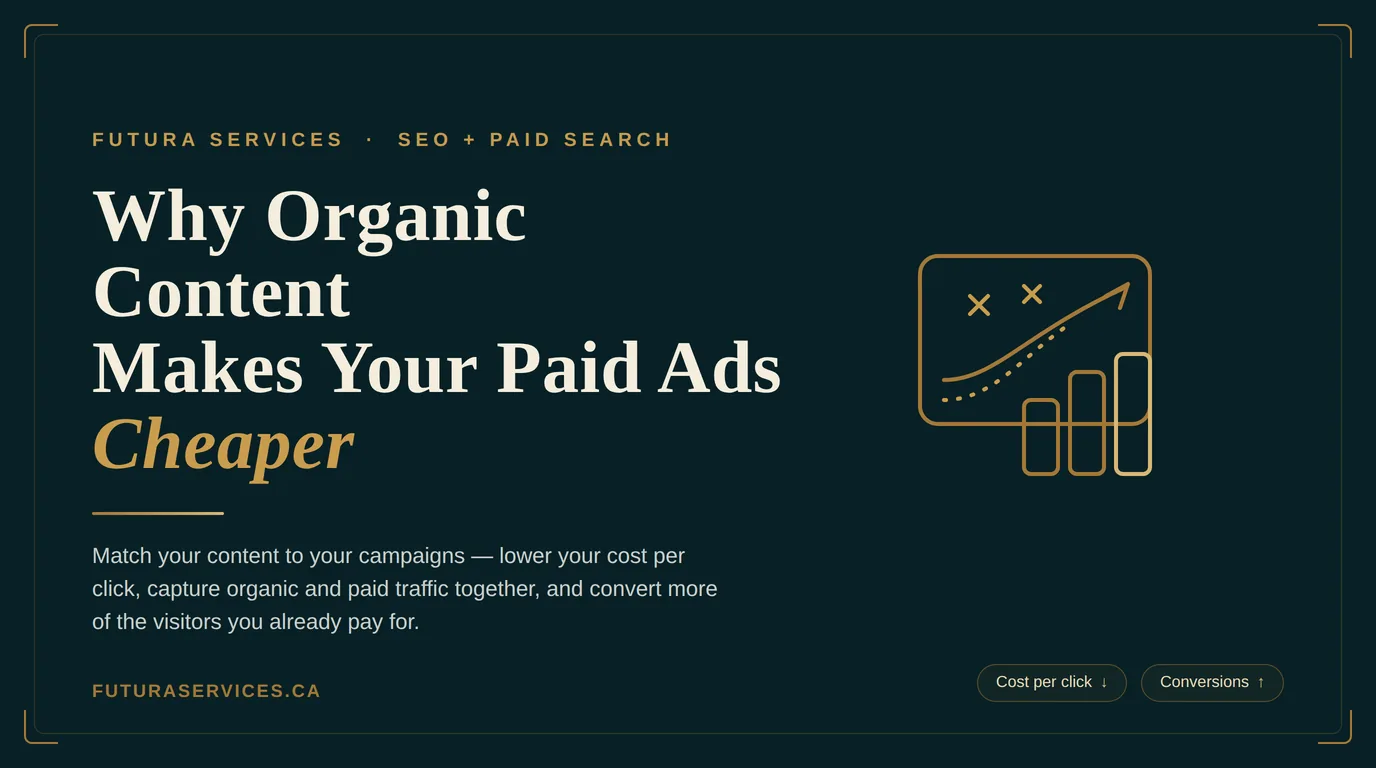
A lot of local and automotive businesses treat paid search and organic content as two separate line items, or worse, as competitors for the same budget. In reality they're teammates. When your website has genuine, relevant content behind your ads, your paid campaigns get cheaper, your cost to win a customer drops, and more of the people who click actually convert. Here's why the two belong together, and what it looks like in practice.
Paid and organic aren't rivals. They're a team.
The instinct many owners have is to pick a side: "Should I spend on Google Ads, or should I invest in SEO?" It's the wrong question. Paid search buys you visibility today; organic content earns you visibility that compounds over time. But the more interesting part is what happens when they work together, because each one makes the other perform better. Ads send qualified traffic to pages that content has made relevant and useful, and that relevance is exactly what the ad platforms reward with lower prices. Skip the content, and you're paying full freight for every click while leaving the compounding benefits on the table.
1. Content that matches your ads lowers what you pay per click
Both Google Ads and Microsoft Advertising decide how much you pay, and where you rank, using a measure called Quality Score. It's built from three things: how likely your ad is to be clicked (expected click-through rate), how closely your ad matches the searcher's intent (ad relevance), and the quality and relevance of the page people land on after they click (landing page experience). Score well on those, and the platforms treat your ad as a good experience for their users, and reward you for it.
This isn't a vanity metric. Your position in the results is set by Ad Rank, which is essentially your bid multiplied by your Quality Score. That's why an advertiser with a Quality Score of 8 and a $3 bid can outrank a competitor bidding $5 with a Quality Score of 4. A higher Quality Score buys you better placement at a lower cost per click, with no change to your bidding at all.
Here's where organic content comes in. The fastest way to tank your landing page experience is a "message mismatch", running an ad promising "Same-Day Brake Repair in Regina" that sends people to a generic homepage. The fastest way to lift it is a page whose headline, content, and answers echo the promise in the ad. That matching content, real information about the exact service you're advertising, is what tells Google and Microsoft your ad is relevant and worth showing. Build it, and you're effectively negotiating a discount on every click.
2. You capture the paid click and the organic one, and lower your cost per customer
When you support a campaign with strong organic content, you stop choosing between paid and organic traffic and start collecting both. A searcher might click your ad today; next week, when they search again, they find your blog post ranking organically and click that instead, at no cost to you. Owning both the paid spot and an organic result on the same search also multiplies your credibility: people trust a business that shows up more than once, and you take up more of the screen your competitors are fighting for.
This is the quiet engine behind a lower cost to acquire a customer. Paid and organic clicks are partly incremental, meaning the organic result captures demand you'd otherwise have to keep buying. One industry analysis found that when organic traffic grows to around half of a business's paid search sessions, blended customer acquisition cost can fall by roughly 20%. It's not hard to see why: every visitor your content brings in for free is a visitor you didn't have to pay for, and that pulls your average cost per customer down across the whole operation.
The shift in how people search makes this more urgent, not less. By early 2026, roughly 68% of U.S. Google searches ended without a click on any traditional result, up from about 60% in 2024, according to SparkToro's analysis. Attention is getting harder to buy one click at a time. Businesses that own durable organic content are capturing interest that pure paid campaigns increasingly can't.
3. Richer content keeps visitors engaged, and engaged visitors convert
Getting the click is only half the job. What happens after someone lands is what decides whether you got a customer or just paid for a bounce. A thin landing page with a phone number and little else gives a visitor no reason to stay, and no information to build confidence with. A page backed by real content, answers to the questions customers actually ask, service details, pricing guidance, examples of your work, gives them a reason to keep reading.
That extra engagement matters in two ways. First, time spent reading and exploring is time spent building trust, and trust is what moves someone from "just looking" to "let's book it." Second, more useful content means more paths to conversion: a visitor who isn't ready to call might download a guide, read a related post, or check your reviews, each one another chance to bring them back. Organic content that surrounds your ad turns a single landing page into an experience, and experiences convert far better than dead ends. Analyses of channel performance have repeatedly found that organic search visitors convert at meaningfully higher rates than paid visitors alone, precisely because the content did the work of earning their confidence before they ever reached out.
What this looks like for a local or automotive business
You don't need a hundred pages to make this work; you need alignment. For each campaign, the flow should look like this: an ad group for a specific service ("brake repair," "windshield replacement," "tax prep for small business") points to a dedicated landing page about exactly that service, and that page is supported by a blog post or two answering the real questions customers ask ("How much does a brake job cost in Saskatchewan?" "How long does a windshield replacement take?"). The ad, the landing page, and the supporting content all speak the same language.
Do that, and every piece pulls its weight: the matching content lowers your Quality Score cost, the organic posts capture the searches your ad budget doesn't have to, and the depth keeps visitors engaged long enough to convert. One coordinated effort, three compounding returns.
The Futura Services take
We often meet businesses running respectable ad budgets against nearly empty websites, and then wondering why their cost per lead keeps climbing. Paid search will always work harder and cost less when there's real content standing behind it. Ads buy the door; content makes the room worth walking into. The two aren't competing for your budget, they're multiplying it, and the businesses that treat them as one strategy consistently get more customers for less money than the ones running ads in isolation.
If you're spending on Google or Microsoft ads and you're not sure your website is set up to support them, that's exactly the kind of gap worth closing before your next invoice. Futura Services helps automotive and local businesses across Saskatchewan and Canada align their content and their advertising so every dollar works twice. Reach us at info@futuraservices.ca or visit futuraservices.ca for a free digital visibility audit.
Frequently asked questions
Should I invest in SEO or paid search?
Both, and ideally together. Paid search gives you visibility immediately, while organic content builds visibility that compounds over time. More importantly, each makes the other perform better: relevant content lowers your ad costs, and your ads drive traffic to pages your content has made worth visiting.
How does organic content lower my Google or Microsoft ad costs?
Both platforms price ads partly on Quality Score, which includes ad relevance and landing page experience. When your page content closely matches your ad's promise, your Quality Score rises. Because Ad Rank is roughly your bid multiplied by your Quality Score, a higher score means better placement at a lower cost per click.
What does capturing organic and paid traffic together do for my costs?
It lowers your blended cost to acquire a customer. Every visitor your organic content brings in for free is one you didn't pay for, and owning both a paid ad and an organic result on the same search increases clicks and trust. One analysis found blended customer acquisition cost can fall by roughly 20% when organic grows to about half of paid sessions.
Will supporting my ads with content really improve conversions?
Yes. A thin landing page gives visitors little reason to stay; a content-rich page answers their questions, builds trust, and offers more paths to convert. More engagement and time on site generally means a greater chance that the visitor you paid to attract actually becomes a customer.
What's the simplest way to start aligning content with my campaigns?
Pick one campaign and make sure the ad, a dedicated landing page for that exact service, and a supporting blog post or FAQ all speak the same language, then repeat for the next campaign. Futura Services offers a free digital visibility audit to spot the biggest gaps first.
Sources: Microsoft Advertising Quality Score documentation; Google Ads Quality Score and Ad Rank analysis (Groas, 2026); Search Engine Land on blended customer acquisition cost (SparkToro zero-click data); and PPC Hero on integrating SEO and paid search.